Commercial Floor Sanding in Sydenham, SE26
Commercial timber floors in Sydenham take a different sort of punishment from a domestic floor. Office chairs grind grit into lacquer, shop entrances bring in wet footwear, café floors pick up grease and cleaning chemicals, and school or community premises can put several hundred pairs of shoes across the same boards in a day.
We carry out commercial floor sanding in Sydenham, SE26 for offices, shops, restaurants, workshops, schools, places of worship, gyms, clinics, hotels and other busy premises where the floor needs to be repaired properly and returned to service with the least possible disruption. A grey, scratched or dirty-looking timber floor is often not worn out; in many cases the timber is sound underneath and it is the old seal, failed filler or previous maintenance coating that has reached the end of its useful life.
Where sanding alone is not enough, we provide complete Commercial Floor Restoration in Sydenham, planned Commercial Floor maintenance in Sydenham and specialist Commercial Floor Polishing in Sydenham. The correct treatment depends on the species, floor construction, existing coating, moisture condition and the way the premises are actually used.
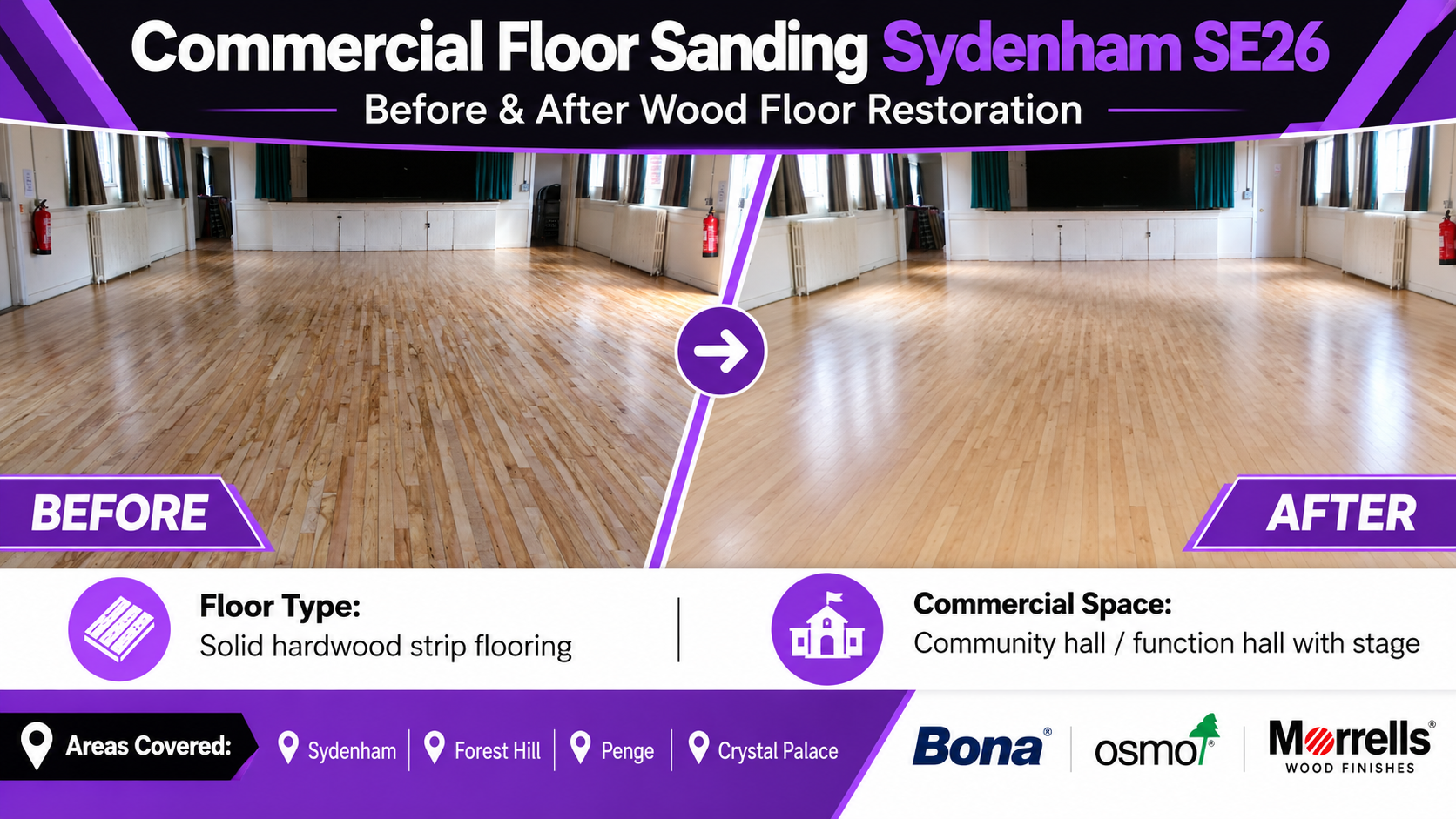
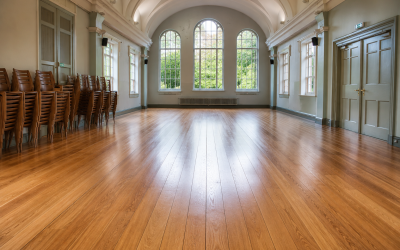
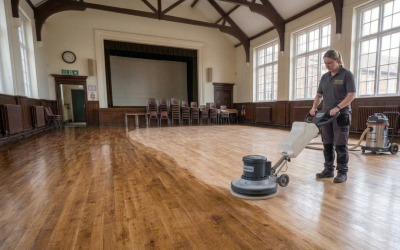
Commercial floor sanding in Sydenham SE26 – before and after restoration of solid hardwood strip flooring in a community and function hall.
Commercial Timber Floors We Restore Across Sydenham
SE26 contains a broad mix of commercial property. Around Sydenham Road and Kirkdale there are traditional shop units, cafés, offices and converted upper floors, while the surrounding streets include Victorian conversions, later commercial premises and substantial Edwardian buildings.
The Sydenham Thorpes Conservation Area between Sydenham Road and Mayow Park is particularly associated with Edwardian development. Floors in older buildings around this part of south-east London frequently include suspended softwood boards, pitch pine, oak strip, parquet blocks and floors altered repeatedly as buildings have moved between residential, retail, educational and office use.
We regularly plan restoration specifications for premises such as:
- Private offices, coworking spaces and serviced offices
- Shops, boutiques, showrooms and shopping-centre units
- Restaurants, cafés, pubs and takeaway premises
- Factories, workshops and light manufacturing units
- Storage units, distribution centres and delivery depots
- Gyms, cinemas, event venues, rehearsal rooms and studios
- Hotels, hostels and serviced accommodation
- Clinics, dental practices and treatment rooms
- Schools, colleges, universities and academies
- Churches, mosques, temples and community buildings
Why Commercial Floors Fail Differently From Domestic Floors
A commercial floor cannot sensibly be specified on appearance alone. We look at pedestrian traffic, trolley loads, castor-chair movement, entrance contamination, cleaning regimes, spill risk and whether the area needs to tolerate repeated disinfecting or wet cleaning.
Off-the-shelf polish can make a tired floor appear brighter for a short period, but it will not correct an unstable parquet block, contaminated coating, broken board or worn-through lacquer. Putting polish over a failing film can also create adhesion problems when proper refurbishment is eventually undertaken.
Typical defects we find on commercial sites include:
- Open board and parquet joints: gaps collect grit, food residue and cleaning solution and can make routine hygiene harder to control.
- Loose parquet: failed bitumen or adhesive can allow blocks to rock, click or lift under concentrated foot traffic.
- Worn traffic lanes: entrance routes, reception desks, tills, bars and corridors commonly wear through before the remainder of the floor.
- Moisture ingress: leaking appliances, wet entrances, slab moisture or historic damp can cause cupping, adhesive failure and dark staining.
- Slip risk: an unsuitable coating, grease contamination or incorrect maintenance product can significantly alter wet-floor behaviour.
- Previous coating incompatibility: acrylic polish, wax, silicone contamination and poorly bonded lacquer can prevent a new system adhering reliably.
- Excessive previous sanding: older tongue-and-groove boards sometimes have limited wear layer remaining and need a restrained sanding sequence rather than aggressive cutting.
Our Commercial Floor Restoration Process
Step 1: Subfloor Audit & Moisture Testing
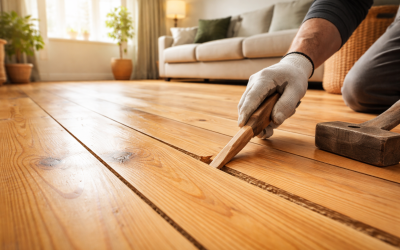
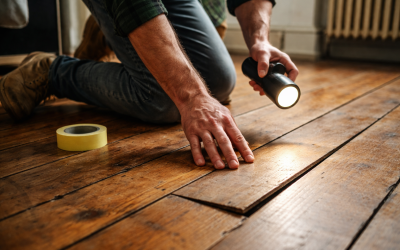
Before we start chasing scratches with a sanding machine, we establish what is actually underneath us. We identify whether the floor is solid strip, engineered timber, parquet, mosaic, sprung construction or traditional floorboards, and determine the likely timber species wherever possible.
Quartersawn oak behaves differently from pitch pine, while teak and other naturally oily timbers need careful preparation before certain waterborne or reactive finishes are applied. We also check board thickness, previous sanding, loose areas, damaged tongues, projecting fixings, old filler and coating contamination.
Where the timber is installed over a slab, or there is any sign of moisture-related movement, hygrometer or appropriate moisture-meter checks form part of the investigation. Sanding a damp floor and sealing it immediately afterwards is poor practice; the source and extent of the moisture need to be understood first.
For managed commercial sites we can prepare RAMS documentation before mobilisation. COSHH assessments cover relevant lacquers, fillers, adhesives, cleaning chemicals and the wood dust generated by sanding, with work areas isolated from staff, customers and members of the public as required.
Step 2: Timber Repairs, Re-bonding & Resin Gap-Filling
Loose timber is repaired before final sanding. Parquet blocks may be lifted individually, old friable adhesive removed and the blocks re-bonded using a suitable modern adhesive; where flexibility is required, we can specify a silane-based flexible parquet adhesive rather than relying on rigid patch repairs.
Missing or badly damaged sections are matched as closely as practical for species, dimensions and grade. On old pine-board floors that can mean reclaimed timber is more appropriate than introducing conspicuously pale new softwood into a century-old floor.
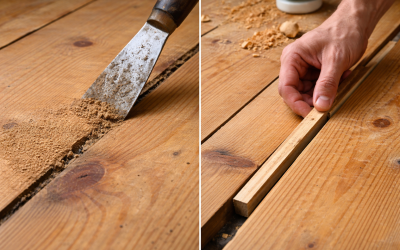
Fine, stable joints can often be filled using a resin-slurry system mixed with clean sanding dust from the floor itself. We do not force resin filler into every gap regardless of width: large gaps, movement joints and unstable floorboards usually need timber fillets, local carpentry or controlled movement rather than a brittle cosmetic fill.
This repair stage is particularly important in cafés, schools, clinics and hospitality spaces. A sound, closed floor is easier for cleaning teams to maintain and gives the finishing system a stable surface to work on.
Step 3: HEPA Dust-Controlled Sanding & Surface Preparation
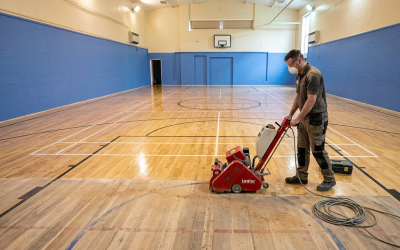
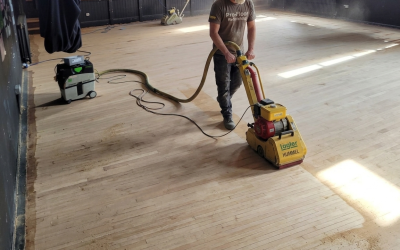
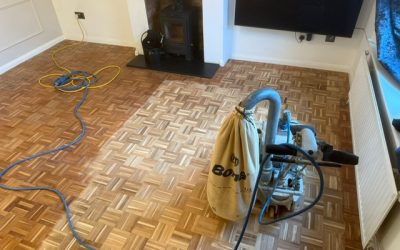
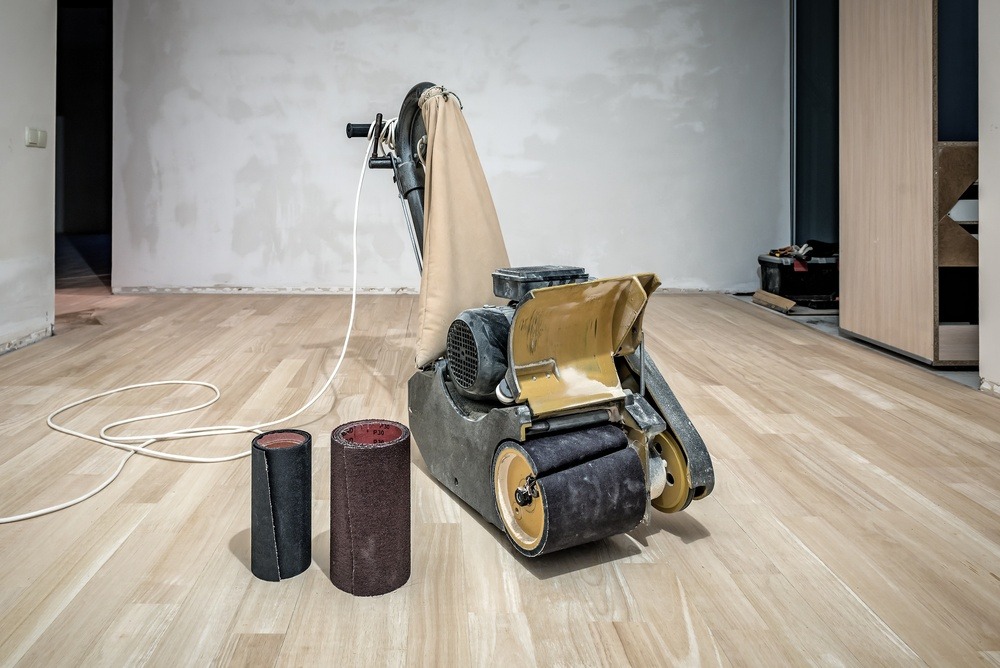
For the main cut we use professional belt-sanding machinery including Lägler Hummel machines rather than lightweight domestic hire equipment. The Hummel’s controlled drum pressure and high sanding rate allow old finish and surface damage to be removed evenly without repeatedly gouging the timber.
The abrasive sequence is selected after seeing the condition of the floor. A heavily painted pitch-pine floor may require an aggressive initial cut, while a previously restored oak floor with a limited wear layer may only need controlled refinishing through finer grades.
Edges, corners, radiator areas, thresholds and detailed sections are dealt with separately so the finished floor does not show a coarse perimeter band around an otherwise properly sanded field. Between stages we use industrial extraction, with compatible machines and cleanup equipment connected to H-class dust control using HEPA H14 filtration where appropriate.
There is no credible claim that commercial sanding produces literally zero dust. The objective is controlled extraction at source, sealed work areas, disciplined vacuuming between abrasive stages and preventing fine sanding dust migrating into stock, IT equipment, kitchens, treatment rooms or occupied parts of the building.
Step 4: High-Traffic Finishes – 2K Lacquers, Hardwax Oils & Anti-Slip Systems
The finish is specified according to the building rather than whatever happens to be on the van. For a busy office, school corridor, shop or hospitality floor, a professional two-component waterborne polyurethane is often the most practical choice.
A 2K system uses a cross-linking catalyst that chemically reacts with the lacquer to produce a tougher film than a basic single-pack coating. Correct mixing ratio, induction requirements where applicable, pot life, film weight, intercoat preparation, temperature and recoat timing matter; a technically good product can still fail if it is mixed or applied badly.
Hardwax oil can be appropriate where the client prefers a lower-build appearance and wants the option of localised maintenance. It does, however, require a maintenance regime suited to the product, and we would not automatically specify it for a wet entrance, intensely trafficked bar or cleaning regime dominated by aggressive detergents.
Slip resistance must be considered where the environment presents a foreseeable risk. The older BS 7976-2 pendulum-test method is still widely recognised in flooring discussions, but that standard has been withdrawn and superseded by BS EN 16165:2021; where formal slip performance is required we recommend that the specification and any testing are based on the current requirement applicable to the site.
For entrance zones, hospitality areas and other wet-risk environments, we can discuss finishes or coating systems offering enhanced slip characteristics. The answer is not simply to add texture everywhere, because cleanability, appearance and coating maintenance also have to remain fit-for-purpose.
Where adhesive, primer or installation products are required in occupied interiors, low-emission products carrying recognised classifications such as EMICODE EC1 Plus can be specified where appropriate. This is particularly relevant to clinics, schools, offices, bedrooms and other spaces that need to return to occupation without unnecessary solvent or VOC loading.
Step 5: Aftercare & Maintenance Protocols
The floor is not finished when the last coat looks dry. Waterborne finishes can become touch-dry relatively quickly while still being well short of full chemical cure, so we give the site manager a realistic handover sequence for foot traffic, furniture, rugs, cleaning and heavy use.
Depending on the coating system and site conditions, light pedestrian access may be possible before the floor is ready for desks, gym equipment, dining furniture or intensive cleaning. Cure schedules are agreed around the manufacturer’s technical data rather than guesswork.
We also advise on entrance matting, felt or suitable furniture protection, castor-chair zones, neutral maintenance cleaners and the point at which a maintenance coat should be considered. Planned recoating costs much less than repeatedly sanding the floor back to bare timber after the protection has completely worn through.
Clients planning ongoing upkeep can read more about our commercial floor maintenance service in Sydenham. Examples of completed timber restoration work can also be viewed on our floor sanding gallery.
Commercial Floor Sanding Without Closing the Building for a Week
On commercial work, access planning is often as important as sanding. A restaurant may need its dining room trading again by service, an office may require reception operational on Monday morning, while a school or clinic may only release areas during evenings, weekends or holidays.
We establish access routes, power availability, alarm arrangements, loading restrictions, noisy-work periods and cure windows before the first machine comes through the door. Where the premises remains operational, work zones can be isolated and handed back in planned stages.
| Working Pattern | Operational Benefit | Typical Facility Suitability |
|---|---|---|
| Overnight | Noisy sanding and initial coating work carried out after customers or staff leave. Useful where daytime trading cannot stop. | Retail units, restaurants, cafés, offices, clinics and reception areas. |
| Weekend Phased | Provides a longer uninterrupted sanding and curing window before weekday operations restart. | Offices, schools, academies, clinics, studios and commercial premises operating Monday to Friday. |
| Sectional | The floor is divided into controlled work zones so another part of the building remains operational. | Hotels, schools, places of worship, large offices, event premises and multi-room facilities. |
Sectional work needs careful thought because stopping a coating at the wrong point can leave a visible lap line. Whenever possible, we phase along natural breaks such as doorways, thresholds, expansion joints or changes in floor direction.
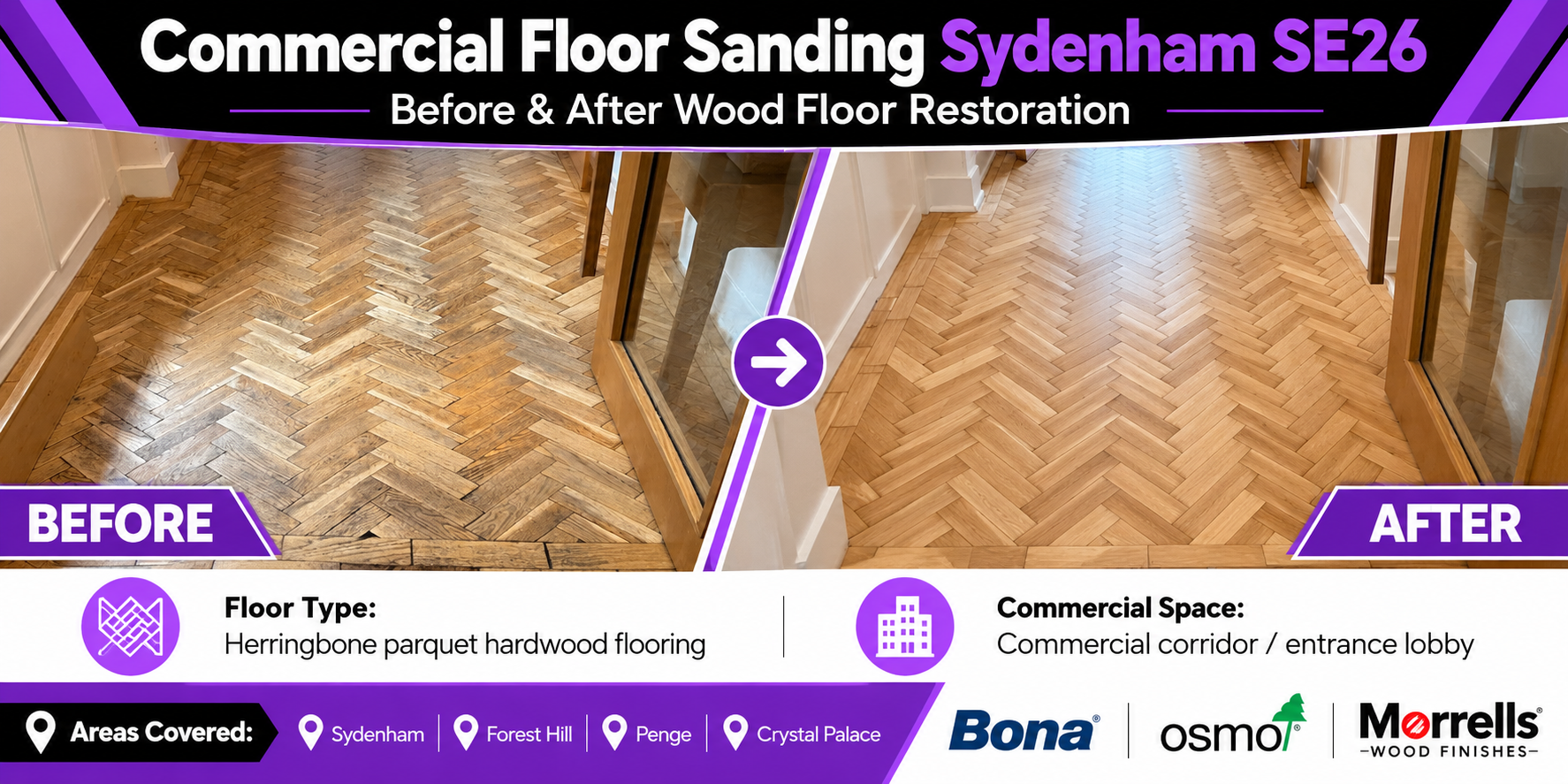
Before and after herringbone parquet floor restoration in Sydenham SE26, showing a worn commercial corridor transformed through professional sanding and refinishing.
Floor Sanding for Offices, Shops, Hospitality and Public Buildings
Offices & Coworking Spaces
Office floors typically wear first at reception desks, tea points, meeting-room entrances and beneath castor chairs. We can programme the work around IT removal, furniture moves and security access, then specify a coating capable of standing up to rolling traffic and regular contract cleaning.
Shops, Boutiques & Showrooms
Retail flooring is judged at close quarters under strong lighting, so uneven sanding and edge marks are particularly obvious. Entrances also suffer abrasive grit and wet-foot contamination, which makes matting and maintenance just as important as the initial lacquer specification.
Restaurants, Cafés, Pubs & Takeaways
Hospitality floors face grease, spilled drinks, chair movement and frequent cleaning. We examine contamination before sanding and select a coating according to the actual service conditions rather than treating the floor as though it were a domestic sitting room.
Factories, Workshops, Storage & Distribution Premises
Older commercial and industrial buildings sometimes retain surprisingly good pitch-pine or hardwood floors beneath decades of coatings and grime. Before restoration we check for oil penetration, concentrated loading, fixings, historical repairs and whether timber remains the correct surface for the proposed operation.
Schools, Colleges, Universities & Academies
Education work normally revolves around strict access windows, safeguarding arrangements and rapid but realistic return-to-use schedules. Halls, classrooms, stages and corridors may require different finishes because the loading and cleaning regimes are not the same.
Churches, Mosques, Temples & Community Premises
Large halls and worship spaces often contain mature timber with local repairs accumulated over many decades. We aim to retain serviceable original material, keep colour variation natural and plan the work around services, events and community access.
Health, Safety and Site Control
Commercial floor restoration generates wood dust, noise and temporary restricted-access areas, and it involves coatings and adhesives that must be handled correctly. Our site planning can include task-specific RAMS, COSHH information, SDS documentation, work-zone segregation and arrangements agreed with the principal contractor, facilities manager or duty holder.
Wood dust is treated as a genuine occupational exposure issue, not just a housekeeping nuisance. Extraction, appropriate respiratory protection where required, vacuum cleaning rather than dry sweeping, and controlled disposal form part of a professional sanding operation.
On shared premises we also establish who controls alarms, keys, permits, isolation areas and emergency access. Where other trades are working at the same time, sequencing matters: there is little sense in applying the final lacquer while decorators, joiners or ceiling contractors are still generating dust over the floor.
Why Timber Identification Matters
Oak, teak and pitch pine cannot simply be treated as interchangeable brown timber. Oak contains tannins that can react with moisture and certain products, teak contains natural oils that can affect adhesion, and old pitch pine can release resin or show dramatic colour change once decades of surface oxidation are removed.
Cut also matters. Quartersawn oak has different figuring and dimensional behaviour from flatsawn material, while old block parquet can contain repairs from several periods that only become obvious after the existing dark finish is removed.
Where a client wants a colour change, we therefore make sample areas wherever practical before committing an entire commercial floor to stain. Existing repairs, end grain, filler and different timber batches can all take stain differently.
Commercial Floor Sanding Prices in Sydenham
Commercial work is normally surveyed rather than priced from square metres alone. Two floors of 150m² can require completely different labour if one is clear open-plan oak and the other contains hundreds of loose parquet blocks, heavy bitumen contamination, fixed counters and restricted overnight access.
Our quotation identifies the proposed preparation, repairs, sanding specification, finishing system and anticipated working pattern so the price can be compared on a like-for-like basis. For general guidance before arranging a survey, visit our floor sanding prices page.
Commercial Floor Restoration Experience You Can Check
Commercial work should be survey-led rather than sold from a photograph alone. Photos and video are useful for an initial assessment, but significant projects are normally followed by a physical site inspection so we can check floor construction, access, moisture indicators, repairs and coating requirements properly.
Site operatives are selected for the requirements of the job, including CSCS-carded personnel where site rules require it, and commercial work is undertaken with appropriate liability insurance. Documentation requirements are discussed before mobilisation rather than discovered at the security desk on the first night.
Our quotations are transparent about preparation and finish specification. If a floor needs board replacement, parquet re-bonding, extra filling or specialist coating, we would rather identify it at survey stage than bury it inside a vague sanding allowance and argue about variations later.