
Professional Gap Filling for SE26 Homes: More Comfort, Fewer Draughts
In many SE26 homes, especially Victorian and Edwardian properties with original timber boards, floorboard gaps are more than a cosmetic issue. They can allow draughts to rise from ventilated voids, make heated rooms feel less stable, and leave your floors looking tired even after regular cleaning. Professional gap filling is not about chasing a perfectly airtight modern look at all costs. It is about choosing the right repair method for the board type, gap width, seasonal movement pattern, and the way the property actually behaves through a South London winter.
At Sydenham Floor Sanding, gap filling is normally assessed as part of the wider restoration process, because the best thermal result comes when sanding, repairs, subfloor checks, and finishing are planned together. In practical terms, well-executed gap filling can help reduce draughts, improve comfort underfoot, limit debris traps between boards, and create a more complete finish system before lacquer or hardwax oil is applied.
Why floorboard gaps matter in Sydenham and SE26 properties
SE26 has a strong mix of period housing, converted flats, and family homes where original pine boards are still in service. In those buildings, the subfloor void often remains ventilated by design. That ventilation is important for timber health, but once gaps widen across the face of the floor, warm room air can escape downward while cooler air is felt rising through the boards. Homeowners usually describe this as a room that never feels quite warm enough near the floor, even when the heating is on.
That is one reason gap filling has a thermal benefit. It does not replace insulation, and it does not solve every heat-loss issue in a period property, but it can reduce localised draught paths through the finished floor surface. In living rooms, bedrooms, hallways, and upper-ground conversions, that often translates into a more even sense of warmth and less movement of dust from below the boards.
There is also a secondary benefit: once large gaps are dealt with properly, the finished surface becomes easier to clean and maintain. Dirt, crumbs, and fine grit no longer drop so readily between boards, which helps preserve the final finish and reduces abrasive wear in high-traffic zones.
What causes gaps between timber boards?
Not every gap means there is a defect. Timber moves naturally as indoor humidity changes. In winter, when heated indoor air becomes drier, boards can shrink and open slightly. In warmer or more humid conditions, they may close again. The real question is not whether a gap exists, but what type of gap it is.
Professionally, we usually look at five things:
- Gap width – hairline, narrow, medium, or wide
- Consistency – isolated gaps or repeated movement across the room
- Board stability – solid boards or loose, bouncy, or poorly fixed sections
- Subfloor conditions – airflow, damp risk, and structural movement below
- Seasonality – whether the gap is likely to reopen as the timber moves
In older SE26 homes, gaps often appear because original boards have dried over time, previous repairs were inconsistent, or the floor has experienced years of seasonal expansion and contraction. In some rooms, old radiator placement, chimney breast changes, suspended subfloor draughts, or historic leaks have also contributed to irregular movement.
The real thermal benefit of professional gap filling
When people hear “thermal benefits”, they sometimes expect gap filling to function like full insulation. That is not quite the right comparison. The real benefit is more targeted and more practical.
1. Reduced draughts at floor level
One of the most noticeable improvements is reduced air movement through the floor surface. Where gaps are large enough to allow perceptible airflow, filling them can make the room feel more settled and more comfortable, particularly in winter mornings and evenings.
2. Improved comfort underfoot
Even when the actual room temperature has not changed dramatically, the floor can feel warmer and less exposed. That matters in bedrooms, children’s rooms, and front reception rooms where people spend time barefoot or in socks.
3. Better performance of the finished floor system
Gap filling supports the final sanding and sealing process. Once the surface is flatter, cleaner, and more continuous, finishes such as hardwax oil or lacquer can be applied with better visual consistency. That does not merely improve appearance; it also helps create a more complete protective layer across the usable surface.
4. Less debris and dust circulation from below
Open joints often allow fine dust and debris from the void below to migrate upward. Properly filled floors are generally easier to keep clean and less prone to the constant appearance of dirt lines between boards.
5. A more complete restoration outcome
If you are already investing in sanding and refinishing, leaving obvious draughty gaps untreated can undermine the result. Professional gap filling helps the floor feel restored rather than simply resurfaced.
Why professional gap filling works better than quick DIY fixes
DIY fillers often fail because they are used without diagnosing the movement pattern of the floor. A filler that looks neat on day one may crack, sink, crumble, or pop out when the boards move. In some cases, the wrong filler can make later repairs harder and spoil the look of the finished floor.
Professional floor restorers do not just fill gaps blindly. They decide whether the right approach is:
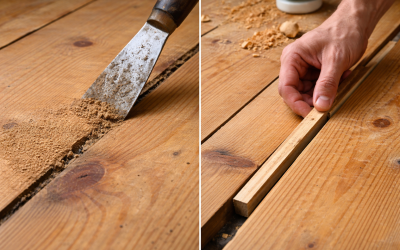
- resin and sanding dust filler for fine and narrow gaps,
- reclaimed wood slivers for larger “Victorian” gaps,
- a flexible filler system in selected movement-prone areas, or
- no filling at all where seasonal movement makes rigid filling a poor choice.
That decision is what protects both the look and the thermal value of the repair.
Resin filler or wood slivers: which is better for thermal performance?
For narrow gaps, resin filler mixed with fine sanding dust can be an excellent solution. It blends visually, works efficiently during sanding, and helps close minor openings that allow dust and light draughts through the surface. It is often the right choice where the gaps are small, the boards are stable, and the movement is not excessive.
For larger gaps, reclaimed timber slivers are usually the better method. This is especially true in older SE26 pine floors where the gaps are visibly wider and too deep or too active for a brittle surface filler to remain reliable. Slivers can be shaped, glued, and integrated into the floor more structurally, producing a longer-lasting repair and a much more convincing finish once sanded flat.
From a thermal comfort perspective, sliver repairs often provide the stronger result on wide-gap period floors because they physically occupy the gap rather than merely bridging over it. That reduces open air pathways more effectively in floors with pronounced board separation.
When gap filling is worth it in SE26 homes
Professional gap filling is usually worth serious consideration when:
- you can feel draughts through the floor,
- gaps are trapping dust and debris daily,
- the property has original pine boards with visible shrinkage,
- you are already planning floor sanding and finishing,
- the room is used heavily and comfort matters, or
- you want a more polished restoration result before sale or letting.
It is particularly valuable in front rooms, hallways, bedrooms, and home offices where comfort and appearance both matter. In many Sydenham homes, the difference is not only visual. The room often feels calmer, cleaner, and less exposed at floor level once the work is carried out properly.
When filling every gap is not the right approach
Experienced contractors know that not every gap should be closed. If a floor has strong seasonal movement, moisture imbalance, or unstable boards, aggressive filling can fail. In those cases, the right answer may involve stabilising loose boards first, correcting isolated repairs, improving subfloor conditions, or selectively filling only the gaps that can be treated reliably.
This is why proper assessment matters. In older suspended timber floors, the goal is not to block healthy ventilation below the floor. The goal is to treat the floor surface intelligently so you reduce unwanted draughts and improve day-to-day comfort without creating a new moisture problem.
How the professional process usually works
Survey and floor assessment
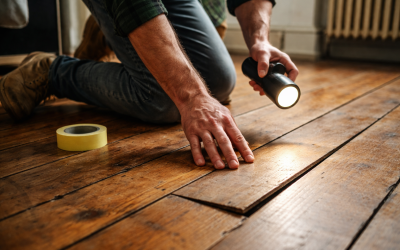
The process starts with identifying board type, gap sizes, previous repairs, signs of movement, and any obvious moisture or fixing issues. Loose or noisy boards may need attention before any filler is considered.
Preparation and sanding
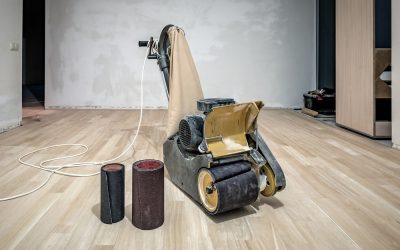
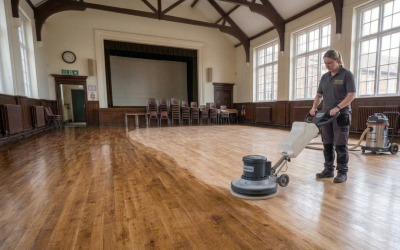
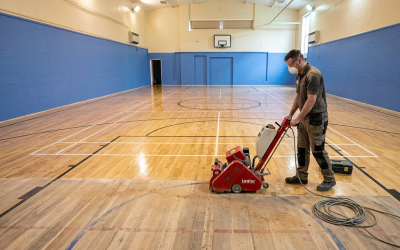
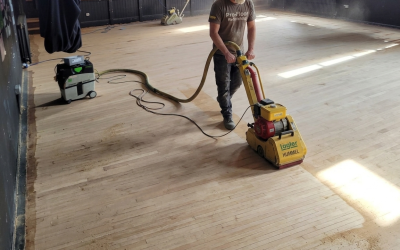
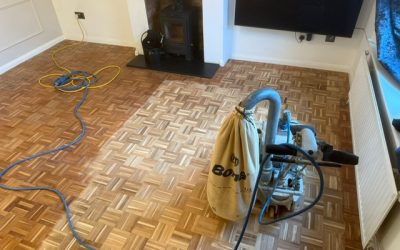
The floor is prepared and sanded through an appropriate grit sequence, often beginning more aggressively on uneven or paint-marked boards and refining gradually for finishing. This stage reveals the true condition of the joints and determines the best fill method.
Gap filling by method, not guesswork
Narrow gaps may be filled with resin and clean sanding dust for a close colour match. Wider gaps in old pine boards are usually better repaired with reclaimed slivers cut and fitted to suit the floor. This is where craftsmanship matters most.
Final sanding and finishing
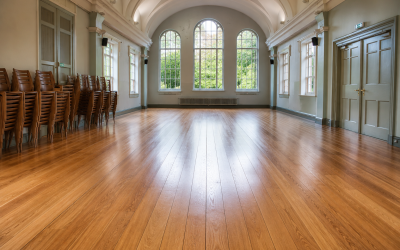
Once repairs are secure, the floor is sanded flat and sealed. Depending on the room and the client’s priorities, that may be a durable lacquer system or a hardwax oil finish. A properly filled floor generally looks more refined and feels more complete after finishing.
Choosing the right finish after gap filling
The finish does not create the thermal benefit by itself, but it completes the restoration system. For many family homes, hardwearing lacquer is chosen for ease of maintenance and durability. For clients who prefer a more natural, low-sheen look, hardwax oils such as Osmo systems remain popular.
Whichever route you choose, the quality of the gap filling beneath it influences the final visual standard. Open joints can make an otherwise beautiful finish look unfinished. By contrast, properly repaired boards give the coating a cleaner and more coherent surface to protect.
If you are comparing products and aftercare expectations, you may also want to read our related guidance on oil vs lacquer finishes and long-term maintenance for restored timber floors.
SE26 property types that benefit most
We most often see thermal and comfort gains from professional gap filling in:
- Victorian terraces with original softwood boards and suspended subfloors
- Edwardian homes where boards have dried and opened over decades
- Converted flats where old floors need both cosmetic and practical improvement
- Rental properties where cleaner-looking, easier-to-maintain floors add appeal
- Family homes where hallway and living-room comfort matters through winter
In these properties, the improvement is rarely about one dramatic change. It is usually the combination of reduced draught sensation, cleaner board lines, better finish performance, and a more solid feel underfoot that makes the difference.
Common mistakes to avoid
- Filling movement-heavy gaps with the wrong rigid product
- Ignoring loose boards before cosmetic repairs begin
- Using generic filler on wide original pine gaps
- Sanding and coating over poor-quality previous repairs
- Assuming gap filling alone will solve insulation or damp issues
- Choosing appearance over long-term movement tolerance
Good restoration balances technical judgement with visual finish. That is particularly important in Sydenham homes where older boards can be full of character but also full of quirks.
Professional gap filling is about comfort as much as appearance
For many SE26 households, professional gap filling is worth it because it improves how the room feels, not just how the floor looks. When the right repair method is chosen for the right gap, you can reduce draughts, improve comfort underfoot, cut down dirt traps, and create a stronger overall base for finishing.
That is especially true in Sydenham’s older homes, where original floorboards often remain one of the property’s best character features. Restored well, they can keep that character while performing better in everyday life.
If your timber floor has visible gaps, feels cold at floor level, or is due for refinishing, the most sensible next step is to arrange a professional assessment. You can start with the contact page, review the current pricing guide, or return to the homepage to explore the full service.