
How to Choose Between Resin Fillers and Wood Slivers for Victorian Floor Gaps
If you are planning wood floor sanding in Sydenham, one of the most important decisions often comes before the finishing coats ever go down: how should the gaps between older boards be treated? In many period properties around SE26, especially Victorian and Edwardian homes with original pine floorboards, some gaps are minor and cosmetic, while others are wide, irregular and part of the floor’s age, movement history and character. Choosing the wrong filling method can leave you with cracked filler, visible repairs, trapped movement, or a floor that simply looks wrong for the property.
That is why the comparison between resin fillers for narrow gaps and reclaimed wood slivers for wider Victorian gaps matters so much. Although both approaches fall under the broad heading of gap filling, they serve very different purposes. A fine resin-and-sawdust mix can work well for hairline spaces, pinholes and small joints where the boards are otherwise stable. Reclaimed timber slivers, by contrast, are a more structural and visually sympathetic repair for wider openings where old pine boards have shrunk, shifted or were never tightly laid in the first place.
At Sydenham Floor Sanding, this distinction is already reflected in the way services are presented: small-gap resin filling and wider-gap reclaimed pine slivers are treated as separate repair solutions, which is exactly the right mindset for a high-quality restoration. The goal is not to fill everything with whatever is fastest. The goal is to choose the method that respects the timber, the subfloor movement, the width of the joint, and the final look you want once sanding and finishing are complete.
Why gap size changes the right repair method
Many property owners assume gap filling is a single process. It is not. The width, depth and cause of the gap determine the correct treatment. A narrow joint between boards behaves very differently from a 5 mm, 7 mm or even 10 mm opening in an old Victorian pine floor. When those wider gaps are treated with a brittle or purely cosmetic filler, the repair often fails because the material cannot cope with natural board movement, foot traffic and seasonal expansion cycles.
On narrow gaps, however, a properly prepared resin filler mixed with fine sanding dust can create a neat and efficient repair. It blends with the surrounding timber, sands flush and can improve the overall finish by reducing visual interruption across the floor. This is especially useful where the boards are largely sound and the aim is to refine the appearance rather than rebuild the structure of the joint.
On wider gaps, reclaimed wood slivers are generally the more suitable solution because they replace missing visual and physical mass with actual timber. That matters in period homes, where the floorboards are often softwood with age-related shrinkage, slightly irregular edges and a lived-in patina that modern filler cannot convincingly imitate.
What resin fillers are and where they work best
In professional floor restoration, resin filling usually means a binder mixed with very fine dust taken from the same floor during sanding. That mix is then trowelled across the surface or worked into selected gaps and defects. Once dry, the floor is re-sanded so the repair sits flush with the surrounding boards.
This method is popular because it is efficient, neat and colour-matched far better than generic off-the-shelf wood filler. It is especially effective for:
- hairline gaps
- minor joints between stable boards
- small nail holes and edge defects
- fine cracks in otherwise sound timber
- parquet pinholes and surface-level imperfections
For narrow joints, resin filler gives the floor a more visually continuous appearance and can help finishes sit more evenly across the surface. It is also a useful part of a refined sanding schedule when the boards are already secure and the repair is primarily cosmetic.
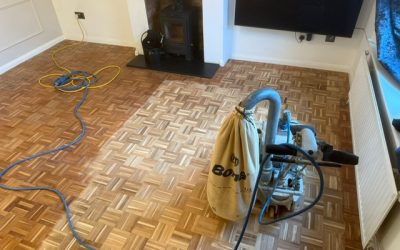
If you want an example of a floor where preparation quality and surface uniformity really matter, see this guide to sanding parquet floors properly. The same principle applies to traditional boards: the cleaner and more stable the surface before finishing, the better the final result.
Where resin fillers start to struggle
Resin fillers are not a miracle cure for every old floor. Their weakness becomes obvious when the gaps are too wide, too deep, too active or too uneven. In these situations, the filler may crack, sink, crumble, or detach from the board edges over time. Even when it holds at first, it can look flat and artificial in a period room where wider timber joints are part of the original character of the floor.
There is also a movement issue. Timber floors are hygroscopic, which means they respond to moisture in the surrounding environment. Boards can shrink in drier conditions and swell again when humidity rises. If a gap is mainly seasonal, over-filling it with the wrong material can create pressure, edge damage or premature failure once the boards move again.
That is why a good contractor does not simply ask, “How big is the gap?” They ask, “Why is it there, how active is it, what timber is this, what is happening beneath it, and what finish is going on top?”
What reclaimed wood slivers are
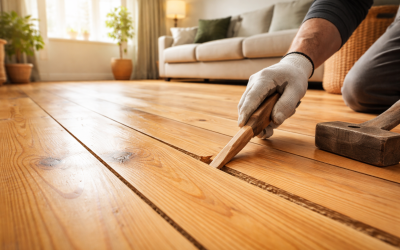
Wood slivers are narrow, tapered strips of real timber inserted into wider gaps between boards. In high-end restoration work, reclaimed pine slivers are often chosen for older softwood floors because they are closer in density, age, grain character and visual tone to the existing boards than fresh modern pine would be.
The sliver is carefully selected, trimmed, glued into the joint and then cut and sanded flush. When done properly, it becomes part of the floor rather than a cosmetic skin sitting on top of it. This is why reclaimed slivers are widely considered the superior method for larger “Victorian gaps” where the aim is not merely to hide the opening, but to restore the floor convincingly and sympathetically.
They are particularly well suited to:
- wider board gaps in Victorian and Edwardian properties
- old pine floorboards with visible shrinkage
- heritage-style restorations where authenticity matters
- rooms where a more permanent, timber-based repair is preferred
- projects where staining or oiling will highlight filler colour mismatch
Why reclaimed slivers suit Sydenham’s period homes
Sydenham has a strong stock of period housing where original floorboards are often worth preserving rather than covering. In these homes, wide gaps are rarely just random defects. They are usually the result of age, historic heating patterns, natural timber shrinkage, past repairs, subfloor movement or old installation methods. Trying to make those floors behave like a newly laid engineered floor is often a mistake.
Reclaimed wood slivers are a smarter fit because they respect the scale and personality of the boards. They can tighten the look of the floor without making it appear plastic or over-corrected. They also tend to sit more naturally under traditional finishes such as oil and hardwax oil, which emphasise grain and variation rather than hiding it.
If your property has older timber with family wear, movement and everyday traffic, you may also find this page on hardwood floor refinishing for busy family homes useful, as it explains how finish choices and practical durability work together once the repair stage is complete.
Resin filler vs reclaimed slivers: the direct comparison
1. Best gap size
Resin filler: Best for hairline to narrow gaps and minor defects.
Reclaimed slivers: Best for larger, visible gaps where filler alone would be unstable or unattractive.
2. Movement tolerance
Resin filler: Limited tolerance if the boards continue to move significantly.
Reclaimed slivers: Better for wider joints because real timber behaves more sympathetically within a timber floor system.
3. Visual result
Resin filler: Can blend well on smaller repairs, especially when mixed with fine sanding dust from the same floor.
Reclaimed slivers: Usually looks more authentic on large-gap period boards, particularly after sanding and finishing.
4. Heritage suitability
Resin filler: Useful, but can look too uniform or artificial in wide openings.
Reclaimed slivers: Far more sympathetic to Victorian softwood character and traditional floorboard scale.
5. Labour and cost
Resin filler: Quicker and generally less labour-intensive.
Reclaimed slivers: More time-consuming and skilled, but often better value in the long term where large gaps are concerned.
6. Performance under stain or oil
Resin filler: Can sometimes telegraph as a different tone, especially in larger sections.
Reclaimed slivers: Usually gives a more convincing finish because it is real wood, not a composite patch.
When you should not fill gaps at all
This is one of the most overlooked parts of the discussion. Not every floor gap needs filling. Some are seasonal, some are necessary for movement, and some are only visually noticeable because the floor has not yet been sanded and finished. If a floor is experiencing live moisture issues, subfloor damp, loose joists or significant bounce, gap filling should never be treated as the first step.
First, the floor has to be stabilised. Loose boards may need re-fixing. Damaged sections may need localised repair or replacement. The subfloor may need inspection. Moisture patterns may need to be understood. Only then should the final filling strategy be chosen.
This is also why broader floor condition matters. If you are looking at environmentally conscious restoration rather than replacement, this article on eco-friendly wood floor sanding in Sydenham is a useful companion read, particularly if you want to preserve original materials rather than strip out serviceable timber.
How professionals decide between the two methods
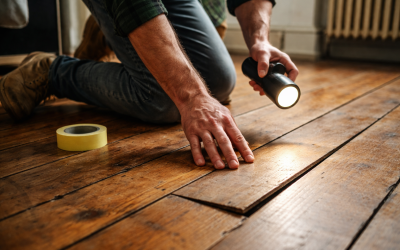
A professional assessment normally includes more than just measuring the gap width with a rule. The decision should involve:
- the average and maximum width of the gaps
- whether the gaps are consistent or irregular
- timber species and board age
- board stability and squeak or bounce levels
- subfloor ventilation and moisture risk
- whether the finish will be lacquer, oil or hardwax oil
- whether the property owner wants a heritage look or a tighter modern look
- whether some movement must still be allowed for
On many Sydenham projects, the right answer is not one method for the whole floor. It is a hybrid approach. Fine resin filling may be used for narrow joints and minor defects, while reclaimed slivers are reserved for the larger Victorian openings that need a timber repair rather than a paste repair.
Why finish choice affects the gap-filling decision
Gap filling should never be considered in isolation from finishing. The final coating will change how visible each repair becomes. A clear lacquer can leave larger filler patches looking flat or slightly off-tone if the gap was too wide for resin in the first place. An oil or hardwax oil finish may make the grain of reclaimed slivers integrate more naturally, which is one reason timber repairs are often preferred in period rooms where warmth and character are part of the design brief.
Professional finish systems also depend on good preparation. Manufacturers of floor finishing systems generally expect surfaces to be clean, dry, correctly sanded and repaired with compatible materials before the coating stage. That makes the filling decision a technical one, not just a cosmetic one.
If you are comparing repair scope against budget, you can also review the floor sanding and gap filling price guide to understand how smaller resin filling and reclaimed pine sliver work are treated differently in practice.
The common mistakes to avoid
- Filling wide Victorian gaps with resin simply because it is quicker.
- Ignoring movement or damp and blaming the filler later when it fails.
- Using new bright pine slivers in old boards where the mismatch will show badly.
- Skipping proper sanding sequence before or after filling.
- Assuming every visible gap is a defect that must be eliminated.
- Choosing a repair method without considering the final finish and room use.
Our professional view: which is better?
For narrow gaps, resin filler is often the right answer. It is efficient, tidy and highly effective where the boards are stable and the imperfections are small. It helps create a cleaner, more consistent surface ahead of sealing and is a standard part of many well-executed sanding jobs.
For larger Victorian gaps, reclaimed wood slivers are usually the better solution. They are more appropriate visually, more sympathetic to period timber, and more reliable than trying to bridge wide openings with a surface filler that was never designed for that scale of movement or repair.
In other words, resin filler is not “better” than slivers, and slivers are not “better” than resin in every context. The better method is the one that matches the gap, the timber, the property and the performance you need from the floor after sanding.
Final thoughts for Sydenham homeowners
If you have original boards in a Sydenham period property, gap filling should be approached with care rather than guesswork. Narrow joints, pinholes and fine imperfections often respond very well to a resin-and-sawdust filling system. Wider “Victorian gaps” usually call for reclaimed pine slivers if you want a repair that looks right and lasts well under real-world use.
The best results come from surveying the floor properly, correcting movement issues first, matching the repair method to the scale of the gap, and then sanding and finishing the whole surface as a complete restoration system. Done properly, the floor keeps its character while becoming cleaner, stronger and far more attractive.
If you would like a professional opinion on whether your boards need narrow-gap resin filling, reclaimed slivers, localised repairs or a full sanding and restoration plan, visit Sydenham Floor Sanding to arrange an assessment. A period floor nearly always rewards the right repair method.